
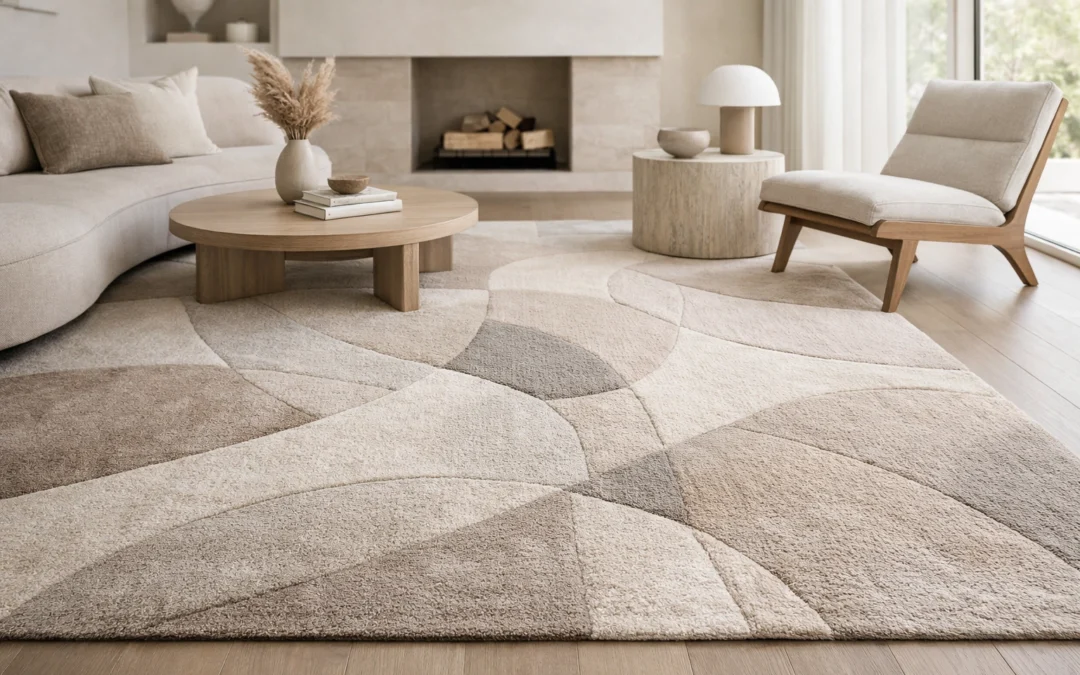
In luxury interiors, the floor does more than “finish” a room—it sets the mood, shapes the layout, softens sound, and quietly ties everything together. At Harcourt Collection, we treat bespoke carpets as a core design layer, not a last-minute add-on. When the rug or carpet is sized correctly, built correctly, and colored with intention, it guides how a space feels and how it works.
For trade professionals and showroom partners, the point is simple: custom flooring solves problems that off-the-rack sizes and standard builds can’t. Here’s how.
Pillar One: Define Space Without Building Walls
Open plans still need structure. Instead of adding partitions, custom carpets create clear zones while keeping the room open and bright.
In high-rise residential and hospitality work, bespoke rugs create “rooms within rooms”—a living area set apart from dining, a conversation area separated from the main path. The edge of a rug can do what drywall can’t: define space without blocking sightlines. Think a 14-foot custom runner that leads from the entry into the living room—clean borders, exact length, no awkward breaks.
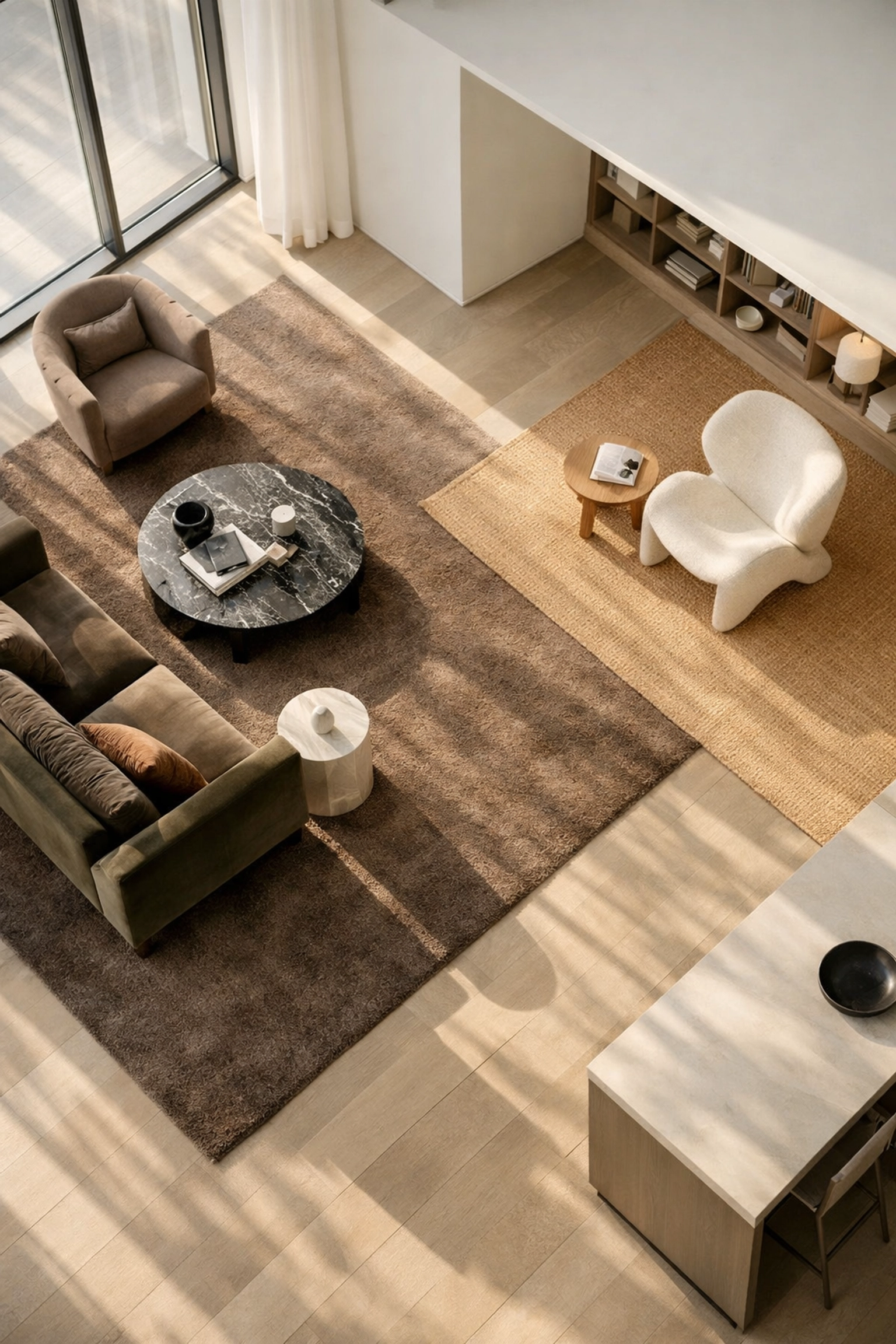
Details matter here. Changes in pile height, texture, and border treatment signal how the space should be used. A dense, low-pile wool in mocha grounds a seating group; a lighter, textured sisal in clay defines a reading nook. The eye reads these shifts as intentional—and the room feels more finished.
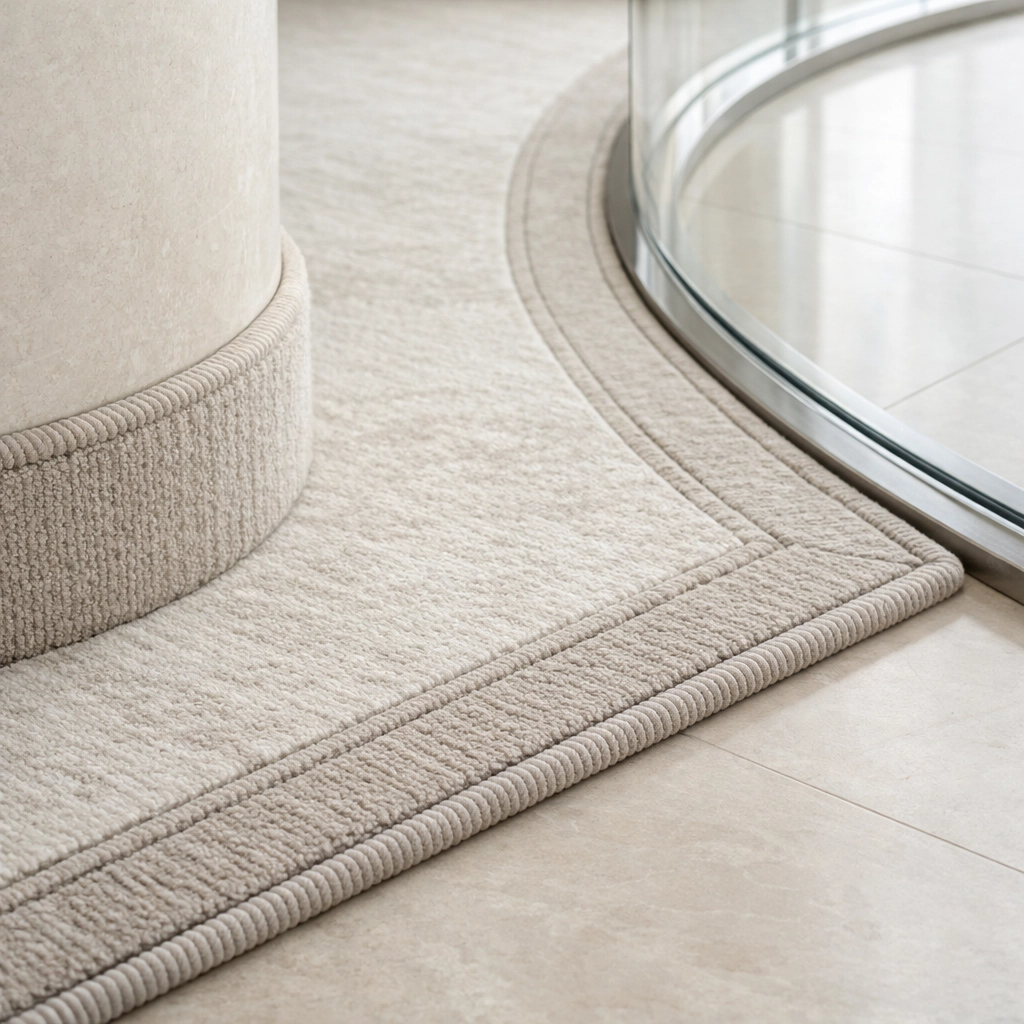
Where bespoke delivers more: Stock rugs force the plan to fit the product. Custom sizing lets the carpet fit the architecture—wrapping columns, aligning with furniture, and going wall-to-wall when the project calls for it. At Harcourt Collection, we build pieces that work with the structure that’s already there, not against it.
Pillar Two: Quieter Rooms, Better Comfort
Luxury spaces need calm. Hard finishes—stone, glass, polished concrete—look great, while they can make a room feel loud and sharp.
Bespoke carpet helps in a very real way. Fiber density, backing, and pile construction all affect sound. A hand-knotted wool carpet with strong density can cut ambient noise by 25–30%, turning an echo-prone penthouse into a space that feels private and controlled.
Texture matters, too. Underfoot comfort becomes part of the experience. In bedrooms and suites, that first step onto a velvety surface signals a shift—less “public,” more “retreat.” The floor delivers comfort before anything else does.
Specification considerations across the trade:
- Wool content: 80%+ for optimal acoustic performance and longevity
- Finer fibers—mohair, cashmere, silk: Layered selectively for tonal depth, light-play, and tactile luxury
- Pile weight: Minimum 60 oz/sq yd for high-traffic luxury applications
- Backing systems: Natural latex over synthetic for breathability and dimensional stability
- Edge treatments: Hand-serged borders prevent fraying in wall-to-wall installations without adhesive
These aren’t styling notes—they’re the specs that decide whether a space feels truly high-end day after day.
Pillar Three: Pull the Whole Room Together
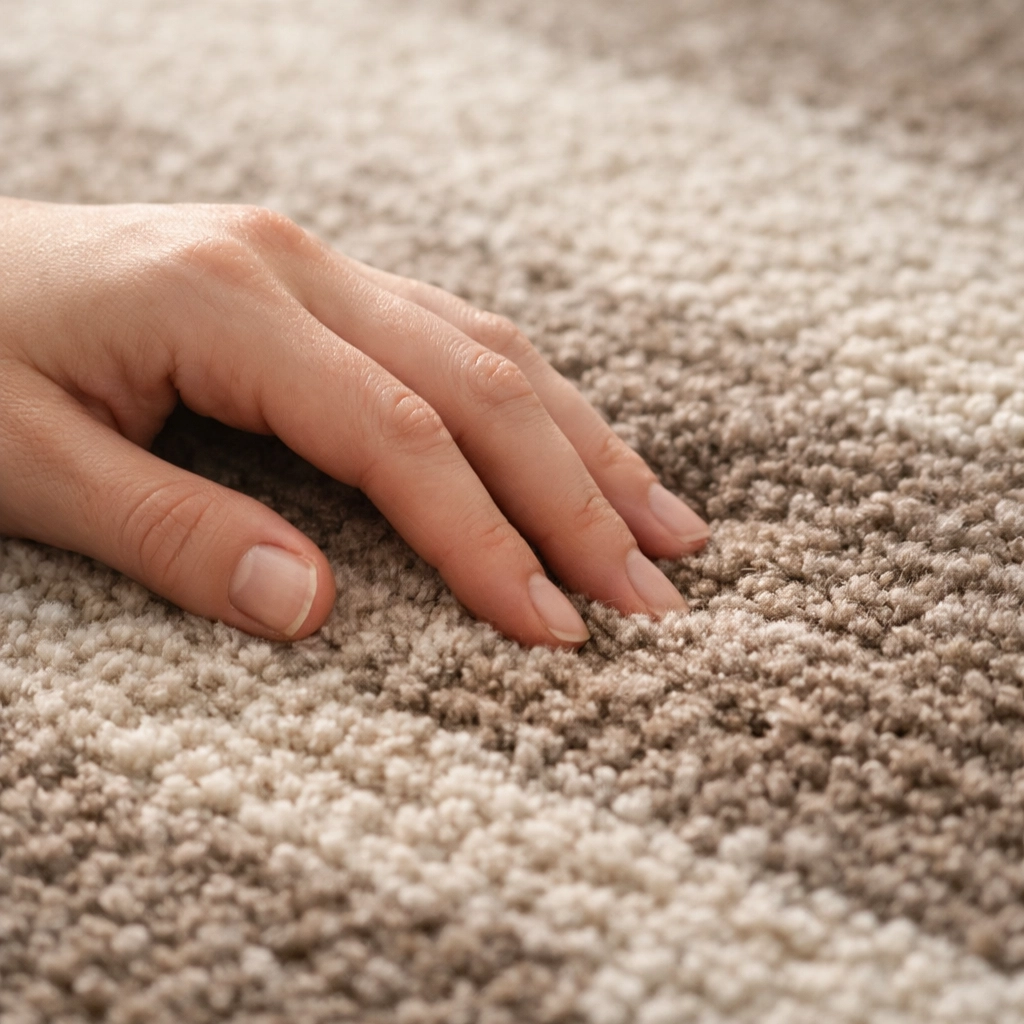
In real projects, design styles often mix—midcentury pieces, contemporary art, classic architecture, and modern lighting in the same space. The floor is what can make it all feel intentional.
Custom color makes the biggest difference. A rug in cacao, ash, and slate can connect charcoal upholstery, walnut casegoods, and limestone walls—tones that can look disconnected without a bridge. The carpet becomes that bridge.
Pattern plays a role, too. In layered, art-heavy rooms, a solid or subtle texture gives the eye a place to rest. In minimal interiors, a tonal pattern—soft geometry, striation, or hand-carved detail—adds depth without clutter.
At Harcourt Collection, we keep the process collaborative because the goal is clarity: take the design intent and make it real—through materials, proportion, and build.
Pillar Four: Custom Isn’t Extra—It’s How Projects Stay Clean
Every job has constraints—architects, designers, builders, and procurement teams all feel it, and trade + retail showrooms feel it fast when timelines tighten. Rooms don’t match standard sizes. Furniture plans shift. Clients ask for specific fibers, sustainability targets, or a certain feel underfoot.
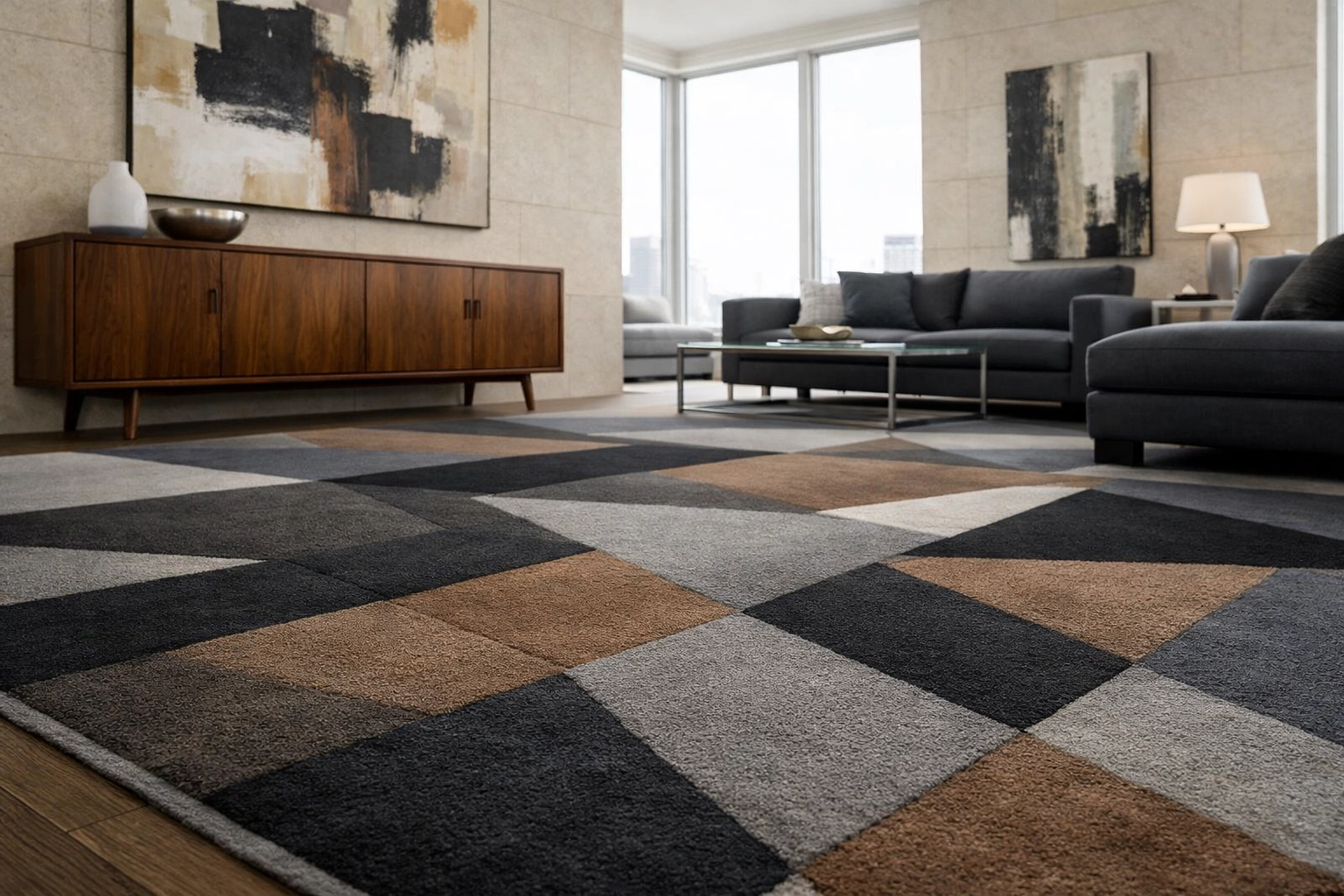
This is where made-to-order becomes the smart move. Custom dimensions fill the room properly—no odd gaps, no bunching, no trimming that looks like an afterthought. Bespoke production also handles tricky footprints—L-shaped living rooms, curved glass walls, circular seating areas.
Material choices solve performance needs. Hospitality lobbies often call for solution-dyed nylon for stain resistance and colorfastness. Wellness rooms lean into natural jute or sisal for a grounded, nature-forward feel. Executive offices often use wool-silk blends—or mohair, cashmere, and silk accents—for a sharper, richer surface that still holds up to daily use.
Harcourt take: Standard inventory can’t cover these variables. Our bespoke capabilities let you control material, size, and construction so the carpet serves the plan—not the other way around.
Pillar Five: Craft, Construction, and Long-Term Value
Bespoke carpet-making is built on real craft—methods refined over time, and materials chosen with purpose. That matters because luxury clients expect longevity. A premium carpet should wear in, not wear out.
Construction as a Scope Lever: High-End Look, Smarter Budget Control
Construction is the most direct way to balance performance, lead time, and cost—while keeping the high-end read. Trade and retail showrooms use this daily: one design direction, multiple build paths.
- Hand-knotted: The benchmark for longevity and detail—ideal for high-traffic hospitality, corridors, and heirloom residential installs
- Hand-tufted: Faster turnaround with strong dimensional stability—suited for accelerated schedules and mid-range budgets
- Hand-loomed: Clean, consistent texture with strong scalability—ideal for contemporary programs and controlled pattern work
- Hand-woven: Craft-forward structure with refined surface character—suited for design-driven residential and boutique hospitality scopes
- Flatweave / kilim: Low-profile, crisp geometry—ideal for modern programs, layered styling, and tighter clearances
- Axminster / Wilton (loomed): Pattern clarity at scale—suited for broadloom programs where repetition and precision matter
- Hybrid blends: Wool grounded with silk, mohair, or cashmere detailing—used strategically for sheen, contrast, and tactile elevation
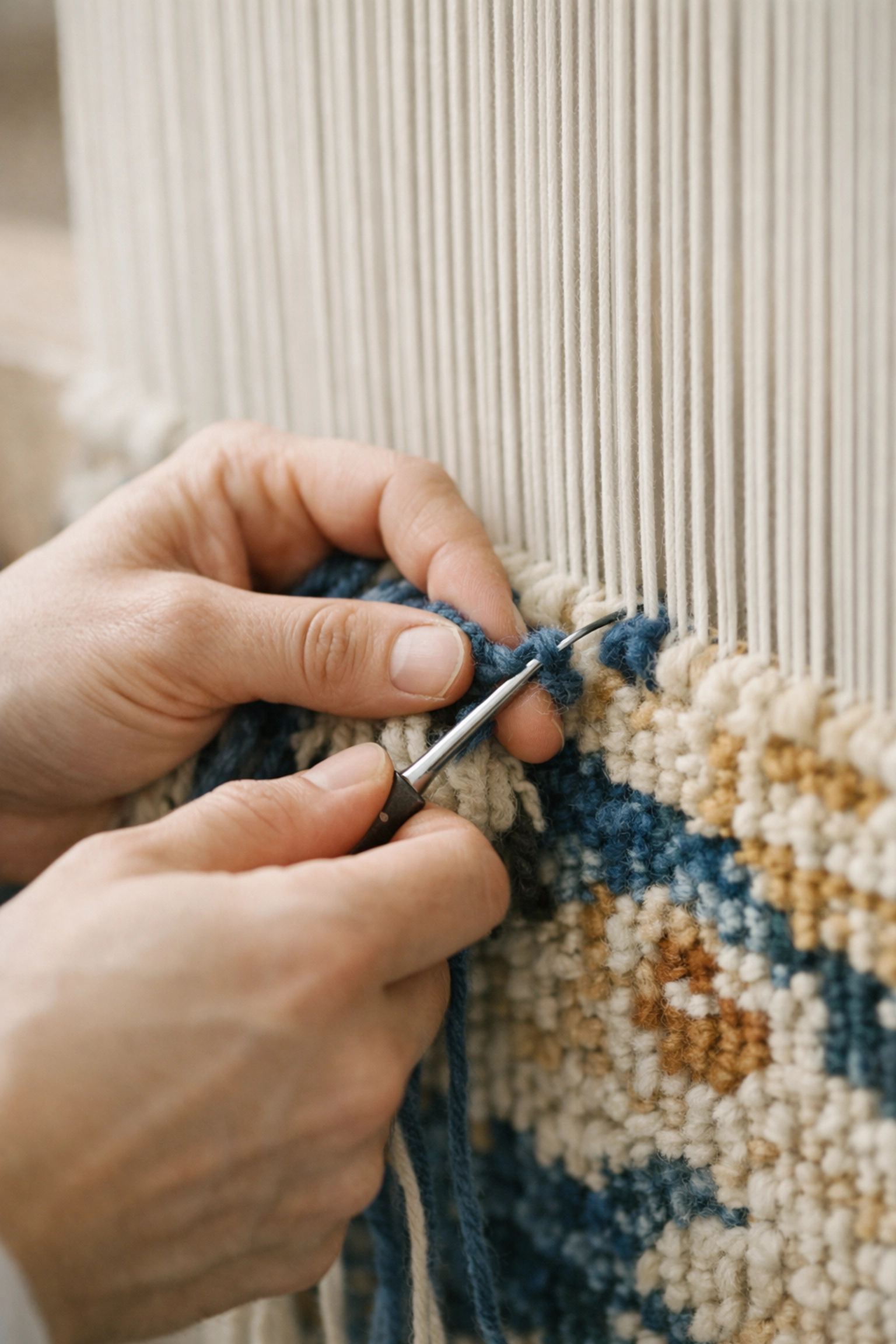
Hand-knotted remains the durability leader. Each knot anchors the surface, spreading wear across the field instead of relying on a backing system to do all the work. The result is a carpet that holds its shape and develops character over time.
Hand-tufted is often the best answer when the timeline is tight—hotel openings, quick renovations, move-in dates that won’t move. You still get custom size, custom color, and a premium finish, without the longest lead time.
Longevity also comes from taste. Timeless pattern and color hold value longer. At Harcourt Collection, we lean into palettes that stay relevant—mocha, cacao, stone—and textures that feel rich without shouting. That’s how projects stay premium through changing trends.
Specifying for Success: A Framework for the Trade (Including Trade + Retail Showrooms)
When carpet is treated as a core layer, specs get easier to prioritize:
For space planning: Start with circulation. Mark primary paths, seating zones, and thresholds. Use custom sizing and borders to reinforce those zones—separate rugs, or one piece with clear boundary cues.
For sound control: Look at room volume and hard-surface percentage. Specify density, pile, and backing accordingly. In tough rooms—double-height ceilings, glass walls—wall-to-wall coverage often performs better than smaller rugs.
For visual cohesion: Pull three key colors from the room. Match them closely with custom dyeing. Use pattern to add depth where the room is quiet, while keeping it restrained where the room is already busy.
For long-term wear: Choose construction based on traffic. Hand-knotted for the highest use, hand-tufted for strong value, flatweave for low-profile stability. Lock in maintenance expectations at install—cleaning schedule, spot care, and rotation where needed.
The Foundation That Performs
The floor is where luxury becomes real. When carpet defines zones, quiets a room, ties the palette together, and meets the demands of the build, the entire project feels more intentional.
At Harcourt Collection, we work with architects, designers, builders, and showroom partners who need flooring that performs at a high level—without compromise. From made-to-order rugs to fully bespoke programs, we deliver the size, materials, and construction options that keep projects clean, premium, and on-brief.
Specify the floor with the same care as everything above it. The room will show it.

Recent Comments